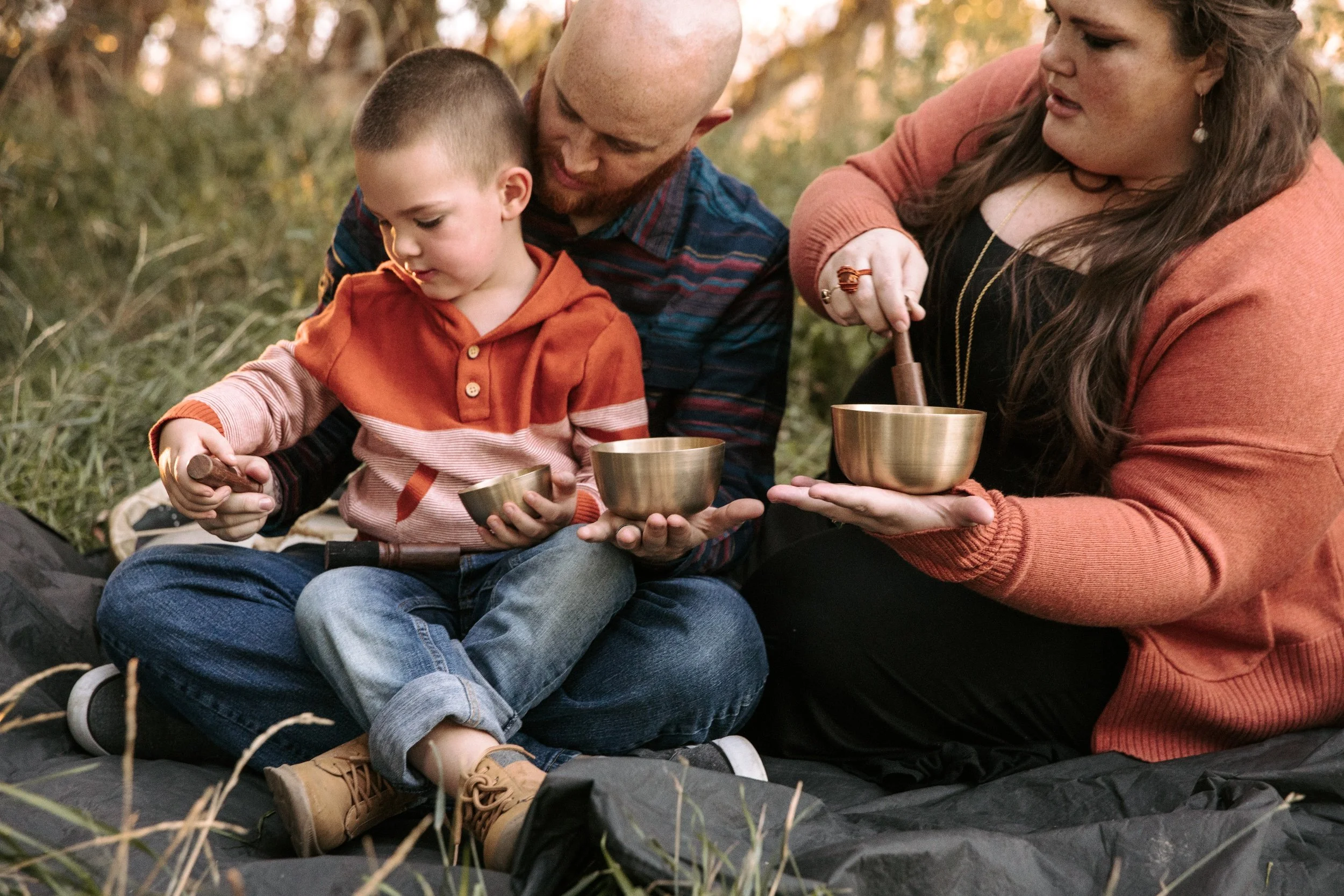
Why Rest Is a Family Value, Not a Luxury
For a long time, I thought rest was something I had to earn.
I thought if I worked hard enough, pushed long enough, produced enough, served enough, carried enough, then maybe I could stop. Maybe then I could breathe. Maybe then I could let my body soften.
But the problem with living that way is that your body starts to believe stress is the baseline.
Your nervous system gets used to the treadmill. The pressure starts to feel familiar. Productivity becomes proof that you are okay. The rush of getting things done, solving the problem, pushing through the pain, and being needed becomes its own kind of reward.
And eventually, stillness feels unsafe.
I know this because I lived it.
For years, I struggled with weight, health issues, pain in my body, and autoimmune disease. And the pain eventually became too loud to ignore. My body was no longer whispering. It was screaming.
I had to learn that rest was not laziness. Rest was not weakness. Rest was not quitting.
Rest was healing.
And I do not mean rest only as sleep, although sleep matters deeply. I mean the kind of rest that rebuilds a life from the inside out. The kind of rest that teaches your body it is safe to be here. The kind of rest that becomes a family value because everyone in the home is affected by the pace we normalize.
In our culture, we celebrate the climb. We reward the hustle. We praise the exhausted parent, the overcommitted leader, the person who never drops the ball. But what if we also celebrated the pause? What if we honored the quiet night, the slow walk, the simple meal, the honest conversation, the boundary, the nap, the prayer, the blank space on the calendar?
What if our children learned that health is not just what we accomplish, but how peacefully we are able to live inside our own bodies?
That is the shift I had to make.
I began introducing rest in small, digestible bites. Not as a dramatic life overhaul. Not as a retreat from responsibility. Just tiny invitations back into my body.
A nap without guilt.
A walk without tracking it.
A meal at the table.
A few minutes without a screen.
A journal entry that told the truth.
A boundary that protected my peace.
A moment of prayer or meditation where I did not ask for anything, fix anything, or perform anything.
Just presence.
Over time, I learned there are different kinds of tired, which means there must also be different kinds of rest.
There is physical rest: naps, stretching, walking, sleep, and letting the body recover instead of demanding more from it.
There is spiritual rest: meditation, prayer, reflection, connection, and remembering that we are part of something bigger than our schedule.
There is emotional rest: boundaries, journaling, self-care, therapy, honesty, and letting ourselves stop pretending we are fine.
There is mental rest: breaks, mindfulness, puzzles, quiet moments, and giving the brain permission to stop solving everything. ( this is why scrolling can feel so good)
There is sensory rest: no screens, nature, books, silence, candlelight, and fewer inputs competing for our attention.
There is social rest: connection and communication with loved ones, but also solitude. The kind of solitude that brings us back to ourselves. The kind of joy that is not manufactured or over-created, but simply found in stillness.
And there is creative rest: drawing, cooking, writing, making something new, trying something with no outcome attached.
This kind of rest does not make a family less productive. It makes a family more whole.
Because productivity without recovery becomes depletion. Movement without stillness becomes striving. Serving without replenishment becomes resentment. And a home without rest eventually becomes a place where everyone is surviving, but no one is actually being restored.
Rest is where the nervous system learns safety.
Rest is where the body repairs.
Rest is where children learn that peace is allowed.
Rest is where families reconnect.
So maybe the new family vision is not just about what we build, earn, create, or achieve. Maybe it is also about how we recover. How we celebrate the down as much as the up. How we teach our children that the pause is not the opposite of progress.
Sometimes the pause is the progress.
A family that values rest is not a lazy family.
It is a wise one.
It is a family that understands that the body keeps score, that stress has consequences, and that healing often begins in small, ordinary moments.
A walk.
A meal.
A conversation.
A breath.
A boundary.
A quiet room.
A full night of sleep.
A family brave enough to stop running l
ong enough to finally come home to themselves.